
The Deal that Rewires the Map: What the EU-India Free Trade Agreement Means for PR
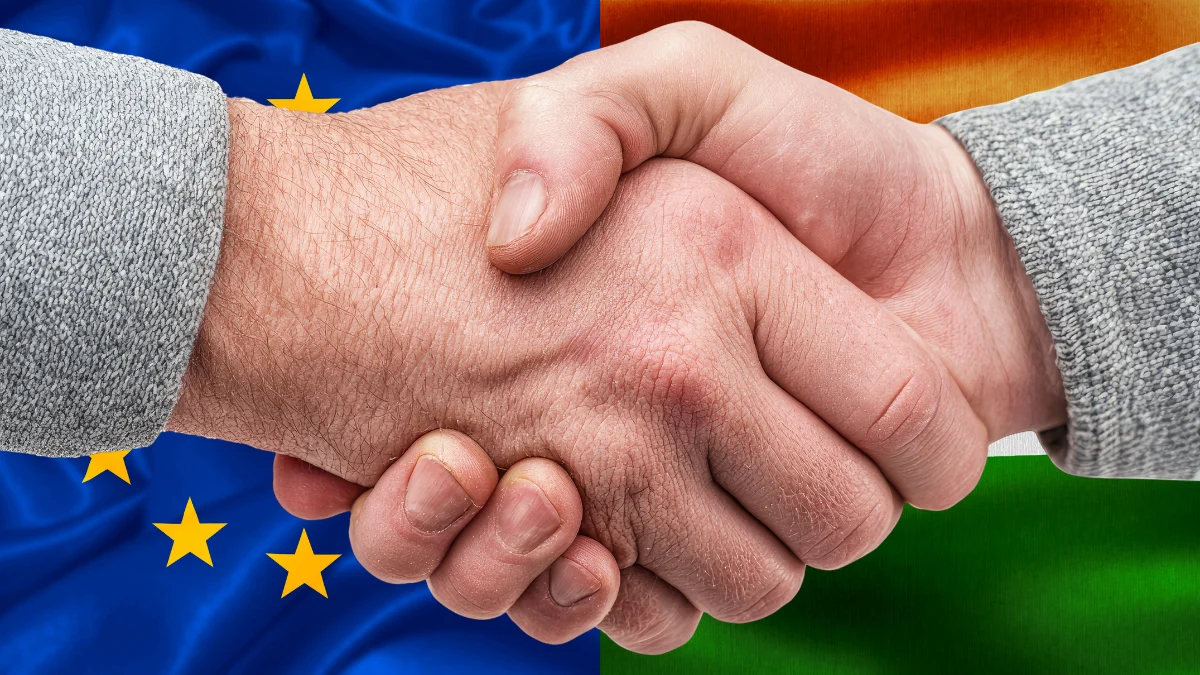
On 26 January 2026, in New Delhi, the European Union and India concluded a Free Trade Agreement twenty years in the making. European Commission President Ursula von der Leyen called it “the mother of all trade deals”, and the numbers justify the label: a market connecting over two billion people, representing approximately 25% of global GDP, with EU exporters projected to save €4 billion in annual duties.
But behind every historic trade agreement, there is a communications challenge. IPRN asked two of its partner agency leaders – Jörg Pfannenberg, Managing Director of JP KOM in Germany, and David Franklin, Vice-President of Concept PR in India – what this deal means for PR professionals, their clients, and the agencies that serve them.
A Market That Can No Longer Be Treated as a Niche
The first question both experts were asked was simple: how does a free trade zone of two billion people change the way clients approach cross-continental PR?
For Pfannenberg, the answer begins with a structural recalibration of how Central European companies think about India altogether. “Up to now, China and the US are by far the most important trading partners of Germany, with India far behind. In the future, India will not be a niche external market anymore — it will become a core growth market.“
The consequences for communications are direct. Companies will need to move from what Pfannenberg calls export communication – episodic, campaign-based, outward-facing – to market-integration communication: long-term reputation building with deeper cultural intelligence, regulatory storytelling, ESG positioning, and the capacity to speak simultaneously to European and Indian stakeholders without losing coherence on either side. “Cross-continental PR will become less about international visibility and more about bilateral narrative alignment,” he says.
Franklin’s framing from the Indian side is equally direct. “It has rightly been called the ‘Mother of all deals.’ It opens a two-way street to progress for both Indian and European businesses.” He sees clients becoming more open to transnational campaigns and believes the FTA creates a genuine opportunity for independent PR agencies to offer access to strategies and geographies on a more economical scale than has previously been possible.
Which Sectors Will Need the Most Support
The two experts were also asked which industries in their respective regions would be seeking the most support in navigating the new market access.
In Germany and Central Europe, Pfannenberg identifies five areas of immediate relevance: automotive and e-mobility, advanced manufacturing and industrial machinery, green energy and cleantech, pharma and life sciences, and IT and digital services. Each brings its own communications complexity. “These sectors will require not only media relations, but public affairs, investor positioning, and employer branding strategies tailored to Indian audiences,” he says.
The pharma sector deserves particular attention, as Indian pharmaceutical companies have already acquired substantial business in Germany, meaning regulatory alignment and research collaboration will demand careful, sustained stakeholder communication on both sides.
Franklin’s sectoral read from India looks different, and productively so. The maximum impact, he believes, will be felt in labour-intensive industries, such as textiles, leather and footwear, tea, coffee and spices, which are set to benefit from immediate duty elimination. “We believe that leading Indian players from these industries will now reach out for PR.“
Equally significant is what happens further down the business ladder: MSMEs and SMEs from these sectors will attempt to realise global ambitions for the first time, and they will need support navigating the EU landscape its regulatory culture, its media ecosystem, its stakeholder expectations.

Communicating to Skeptics… and to Enthusiasts
A deal of this scale inevitably faces resistance. Both experts were asked how PR agencies can best communicate the economic advantages of the FTA to stakeholders who may be unconvinced.
Pfannenberg acknowledges that large trade agreements often raise concerns about job displacement, regulatory dilution, and uneven benefits. His prescription is methodical: localise the macro story by translating GDP-level figures into tangible local impacts such as jobs, SME growth, and supply chain resilience; use third-party validation from economists, trade associations, and business chambers; highlight reciprocity rather than one-sided gain; and lead early with case studies and pilot collaborations as proof points.
He also draws a line that goes beyond economics: “It should be made clear that the Free Trade Agreement between the European Union and India is an important step to decouple European economy from China and make us less dependent on volatile decisions of the US.“
Franklin’s read from India is notably different in tone. “In India, at least, there is more enthusiasm than skepticism.” Rather than managing resistance, he sees agencies needing to carry out strong public affairs campaigns that highlight the positive impact on both sides, and to create narratives that showcase growth impact on clients’ businesses while demonstrating genuine transnational expertise.
How IPRN Agencies Will Need to Work Together
On the evolution of collaboration within the network, both voices converge on the same conclusion: the old transactional model, where one agency outsources a task to another, is no longer sufficient.
Pfannenberg anticipates the emergence of integrated EU-India communications task forces, cross-border media intelligence systems, and shared ESG and sustainability storytelling models. “Rather than transactional agency partnerships, we will see more strategic alliances between European and Indian firms. Cultural fluency, regulatory awareness, and digital platform expertise – especially given India’s unique media ecosystem – will be essential for success. This is where cooperation of European and Indian agencies within the IPRN network comes in.“
Franklin makes the opportunity concrete. “We see the collaboration within the IPRN network increasing. It is a great opportunity for both EU-based agencies and their Indian counterparts to grow their business.” His example is telling: the import duties on automobiles imported from the EU have been significantly reduced. If a European agency has an automotive client, they can now reach out to their Indian IPRN counterpart and plan a coordinated PR campaign for the Indian market, something that simply was not viable before.
He goes further: “We believe dedicated industrial roadshows or summits need to be planned by us.” Italy, as the leading textile manufacturing hub in the EU, could host an Indian textile manufacturing summit to attract buyers. Events like this, planned collaboratively by network agencies on both sides, represent exactly the kind of bilateral business infrastructure this deal calls for.
Shared Values as a Communications Asset
Both experts were asked how PR professionals can leverage the shared democratic values between the EU and India to build stronger brand trust.
For Pfannenberg, those shared principles – democracy, rule of law, pluralism – translate into concrete communications assets: stronger corporate governance narratives, ethical sourcing credentials, transparency and accountability messaging, and the ability to promote diversity and social impact initiatives as shared values rather than imposed standards. “By aligning brand storytelling with democratic resilience and responsible capitalism, companies can foster deeper cross-market trust.“
Franklin sees the opportunity in terms of long-term strategy and physical presence. “It will require long-term strategies that unfold, over time, in both the EU and India.” Sustained engagement through summits, roadshows, and joint campaigns is how trust gets built at scale, not through one-off announcements.
Why Rules-Based Trade Is a Reputation Issue
Finally, both were asked about the importance of the FTA’s commitment to rules-based trade for corporate reputation.
Pfannenberg frames predictability as a strategic asset. “In today’s geopolitical climate, a commitment to rules-based trade between the European Union and India reduces reputational risk tied to regulatory volatility, enhances investor confidence, supports long-term supply chain planning, and signals political stability to stakeholders. For multinational companies, operating within a transparent, rules-based framework strengthens credibility with investors, employees, and customers alike.“
Franklin’s take is more direct: the deal sends the right signal, and that signal has practical value. “The stability provided by the FTA will provide agencies and clients a longer runway to plan their global forays. It also provides businesses with a stable foundation to grow their markets across nations.“
A Communications Turning Point
The EU-India Free Trade Agreement is, for Central European businesses and their Indian partners, a communications turning point. The opportunity lies not just in expanded market access, but in shaping a shared economic narrative between two major democratic regions.
The ratification process still lies ahead, and with it, a year or more before the first tangible benefits are realised. That is precisely the window in which communications strategy must be built, not retrofitted after the fact.
For IPRN agencies on both sides of this new corridor, the infrastructure already exists. The question is how boldly we choose to use it.
IPRN
